A backlog can hold the work and still miss the story
A list of user stories can tell a team what to build. It does not always show what the customer is trying to achieve or how the pieces fit together.
I ran into this while working on a new product concept. I had done research, looked at alternatives, formed a product hypothesis and conducted exploratory customer interviews. There was enough to bring the team in, but an important part of the journey was still unresolved: what we should automate, which system was involved and why that automation would matter.
The business had a tentative release date. I could have turned my findings into a feature list and started writing detailed user stories. That would have made an uncertain solution look more settled than it was.
What I needed was a way to share what we had learned, show what was still unknown and work through the experience with the team.
Bring the team into discovery before the handoff
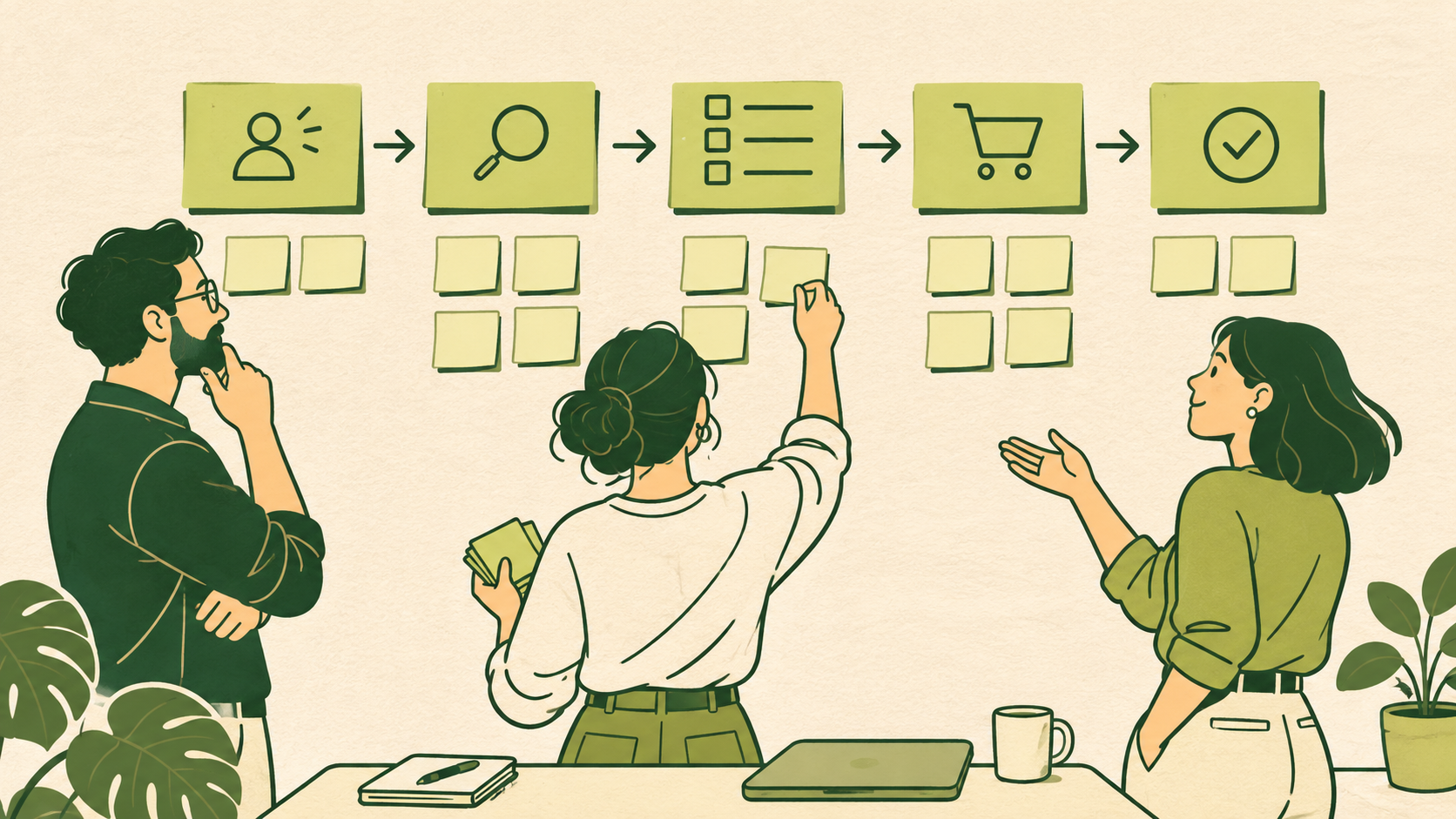
I do not want product discovery to become solo work that ends with a list of requirements for engineering and design.
Customer research gives us evidence about the problem. The team brings different perspectives on how we might solve it, what is feasible and which assumptions deserve testing.
In this case, I wanted the team to understand the missing part of the journey as well as the findings. We could then explore solution ideas together, rather than have me prescribe a feature set before we understood the most important uncertainty. Story mapping helped me structure that conversation.
Map the task from the customer’s perspective
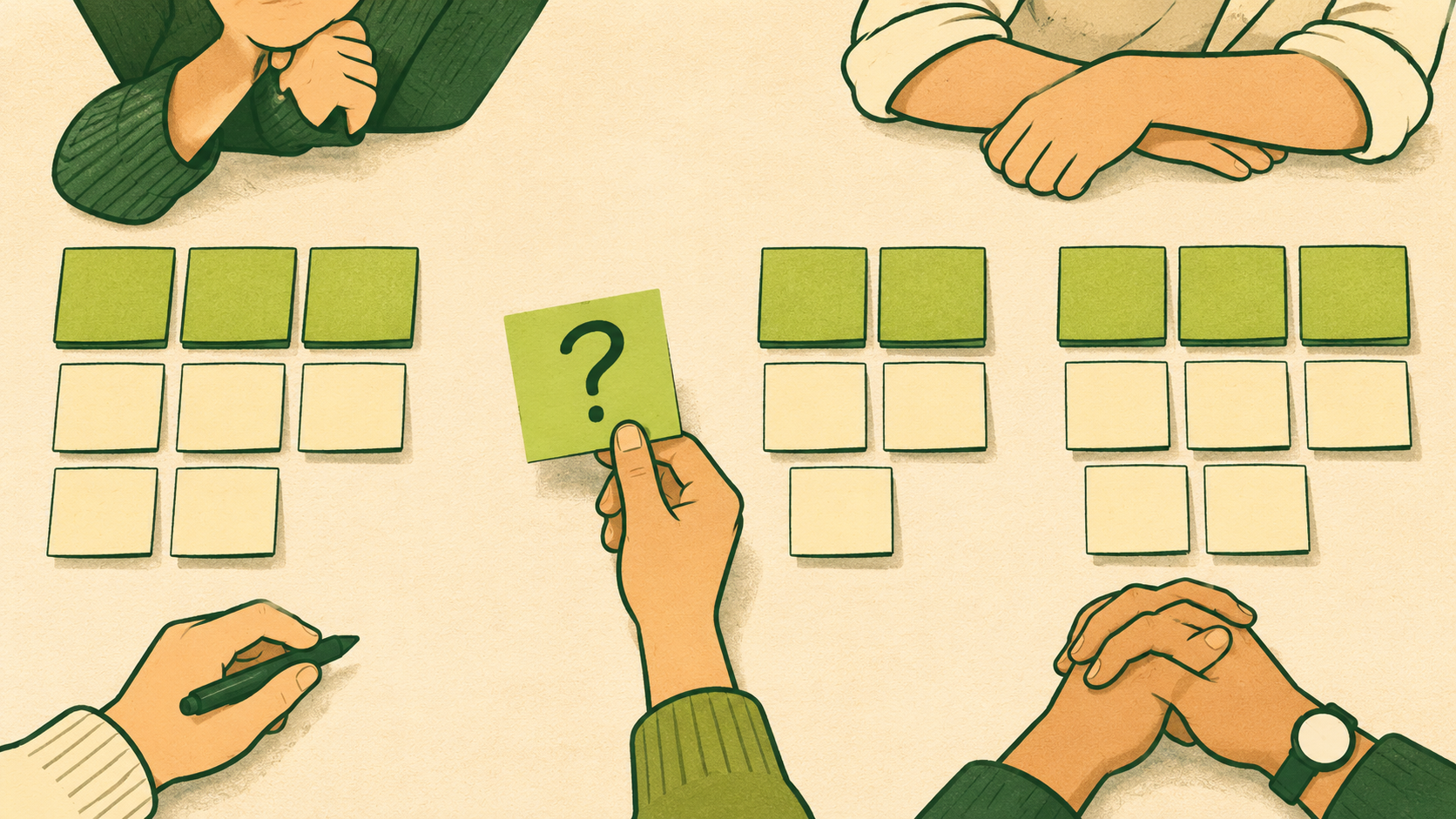
A user story map organises the activities and tasks involved in achieving a goal. It gives the team a shared view of the experience, with the detail sitting underneath the larger activities.
The value is in discussing the connections. Can someone act without understanding the recommendation? Does another person need to approve it? What happens if the alert is irrelevant or the action fails? Those questions are harder to see when the work appears only as separate tickets.
Make uncertainty visible on the map
A map can look convincing before we have enough evidence to trust it.
I would separate what we observed in research, what we are assuming about the proposed experience and what still needs investigation. The map should help us find the open questions, rather than hide them behind a polished sequence.
In my original example, the unresolved automation step was central to the value we hoped to deliver. Filling in the surrounding backlog would not answer that question.
The next step was to investigate it with a clearer hypothesis and further research. The team could help shape that investigation, including technical questions that a customer interview alone would not resolve.
Choose a coherent first release
Once the team has explored the journey, the map helps us discuss a smaller release.
I would ask: what is the smallest connected experience that lets someone achieve the intended outcome? Which steps need to work together? What can be simpler, manual or deferred without breaking that experience?
A small release still needs to make sense from the customer’s perspective. Delivering the easiest task from each part of the map may leave them unable to complete anything useful.
Slicing the map helps here. We can agree a first usable path, then later improvements or additional scenarios. A Now, Next and Later view can communicate direction alongside the map, but it is a separate planning view rather than a substitute for understanding the task.
We still need to test whether the proposed experience is useful and viable. A complete map is not evidence of product-market fit.
Use the map alongside the backlog
I would not replace the backlog with a story map. They do different jobs.
Engineering and design should contribute to the implementation approach. Product should keep the customer problem and intended outcome visible.
Writing more detailed stories is not always the best response to uncertainty. Sometimes we first need a better conversation about the journey itself.
Show progress without confusing it with value
A story map can also help stakeholders who do not follow the delivery board closely. They can see which parts of the experience are being investigated, built or released.
But a “done” label tells us about delivery, not necessarily about customer success. Alongside delivery status, I want to know whether people can complete the task, whether the product helps them achieve the outcome and what we have learned since release. The map can remain a useful shared reference as that evidence develops.
Keep the customer’s task at the centre
My reason for using story mapping was practical: bring research back to the team, make a missing part of the experience visible and avoid committing too early to a flat list of features.
The map does not resolve uncertainty for us. It gives us somewhere to discuss it together and decide what to learn or build next.
If you are shaping a new product and need someone to connect discovery with what the team builds first, you can read more about my fractional and interim product management work.